

13 May – 4 October 2026
Storia di un gesto. Il mito di Meleagro dall’arte classica a Warburg, a Picasso
The History of a Gesture. The Myth of Meleager from Classical Art to Warburg, to Picasso
In Milan, the Fondazione Luigi Rovati presents the exhibition Storia di un gesto. Il mito di Meleagro dall’arte classica a Warburg, a Picasso (The History of a Gesture: the Myth of Meleager from Classical Art to Warburg, to Picasso), curated by Salvatore Settis.
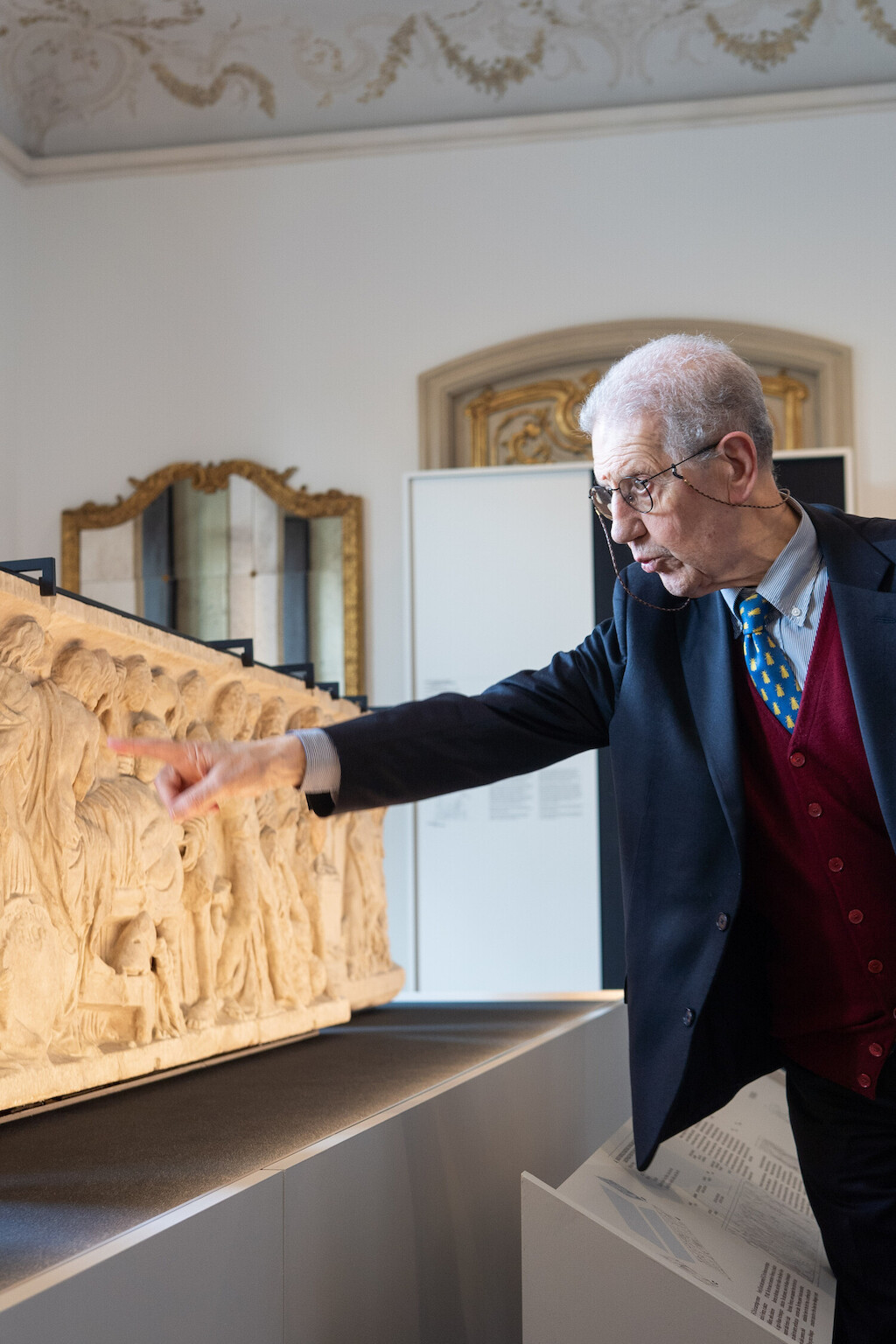
At the heart of the exhibition is the first public presentation of the front panel of a Roman sarcophagus dating from 170–180 AD, depicting the Death of Meleager and other episodes from the myth. Originating from Florence, where it belonged for centuries to the collections of Palazzo Montalvo, and later entering the Brenta-Torno collection in Milan, the relief has remained known almost exclusively to specialists. The work belongs to a rare series of sarcophagi dedicated to the myth of Meleager, structured through narrative sequences including the Calydonian boar hunt, the conflict with his uncles, and the tragic death of the hero caused by his mother Althaea. Among the known examples, the Brenta-Torno sarcophagus stands out for its formal quality and for the early date of its medieval reuse.
The exhibition also presents the two original side reliefs, now preserved at the Museo Archeologico Nazionale di Firenze, shown together with the main front panel for the first time. This recomposition makes it possible to verify the monument’s original unity and fully understand its narrative structure. A further significant aspect is the study of the 13th-century inscription documenting the medieval reuse of the sarcophagus, allowing a more precise historical contextualization.
Alongside its archaeological dimension, the exhibition develops a reflection on the “biography” of a gesture: a figure, generally female, entering the scene with arms thrown backward, a codified expression of despair. Originating in Roman times and documented on a silver vessel from Pompeii — displayed in the exhibition and loaned by the Museo Archeologico Nazionale di Napoli — this gesture disappeared for more than a millennium before suddenly reappearing in the 13th century.
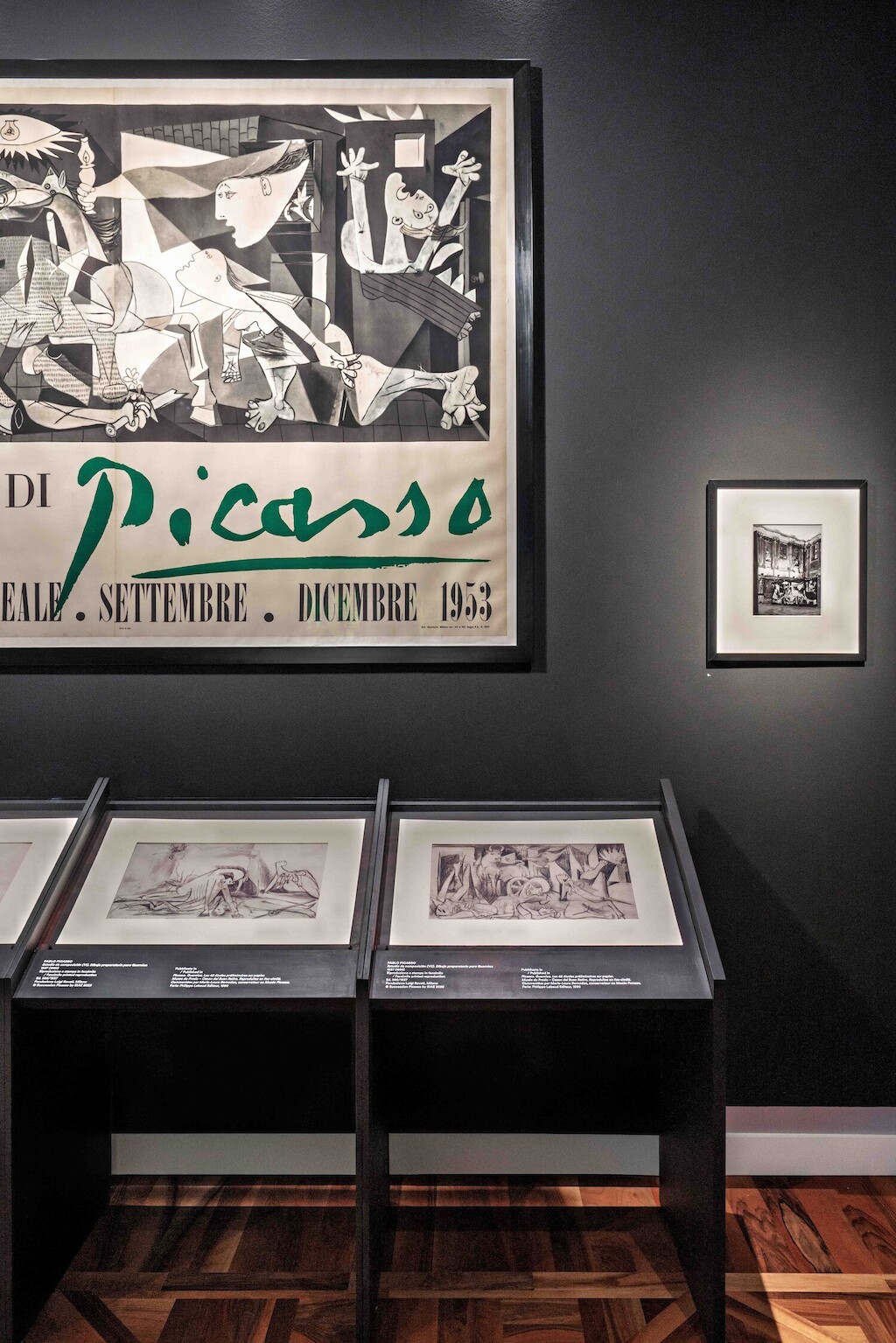
Its re-emergence is documented in landmark works of art history, from Nicola Pisano’s Massacre of the Innocents to Giotto’s Lamentation in the Cappella degli Scrovegni, up to modern reinterpretations including Pablo Picasso’s Guernica, represented in the exhibition through a selection of preparatory drawings and the poster from the historic 1953 Milan exhibition at Palazzo Reale.
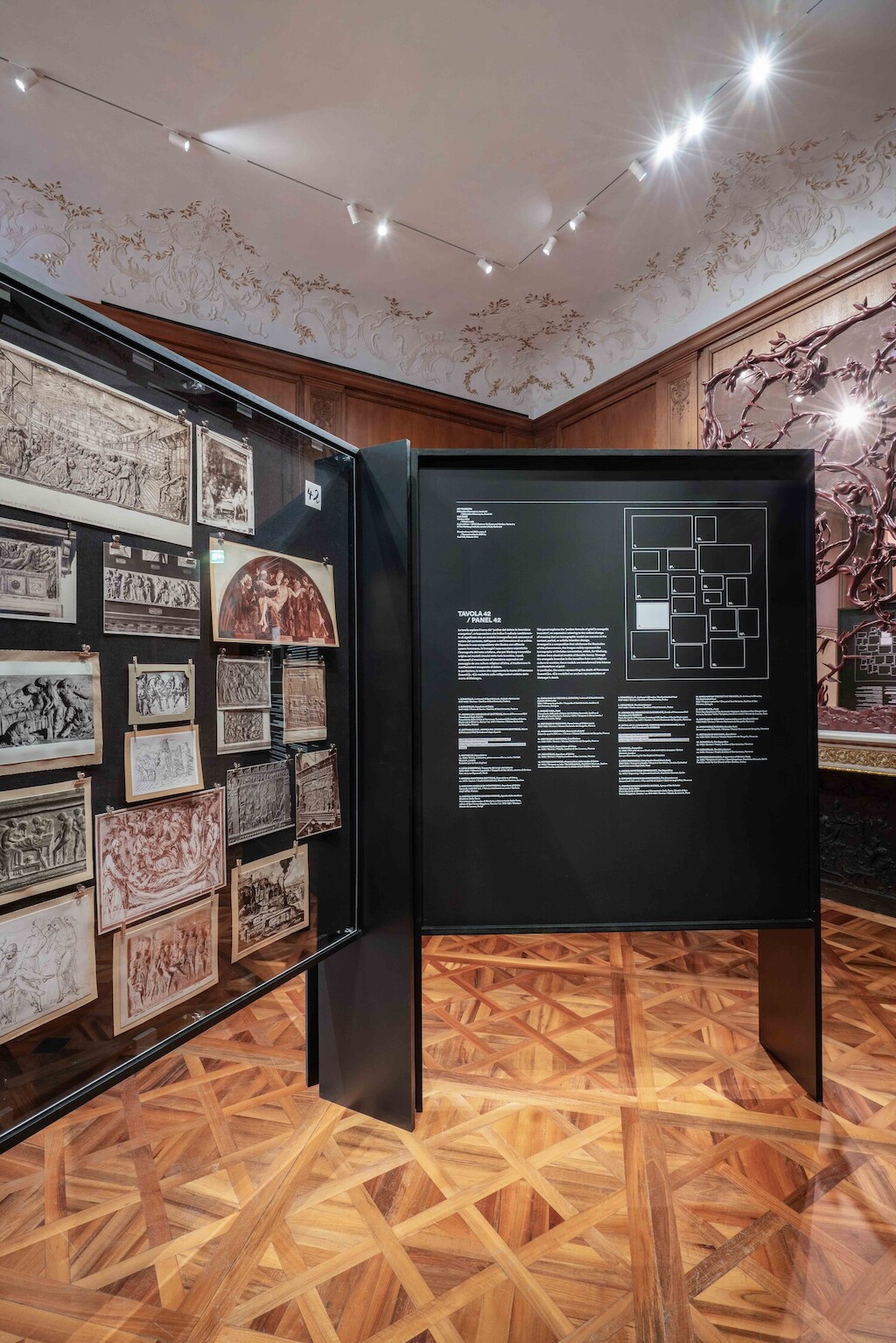
The exhibition path also includes a reference to the thought of Aby Warburg, who identified this gesture as an exemplary case of the transmission of expressive forms from antiquity, summarized in the concept of Pathosformel. Although focusing on a later reuse in a funerary monument (ca. 1485) attributed to Giuliano da Sangallo for the Sassetti Chapel in Santa Trinita, Florence, Warburg was among the first scholars to recognize in the grieving figure of the Meleager sarcophagi a decisive source for the reactivation of this gesture after centuries of oblivion. This passage is represented in the exhibition through the three panels of the Bilderatlas Mnemosyne, in the recent reconstruction by Axel Heil and Roberto Ohrt.
Storia di un gesto therefore proposes an investigation that combines archaeology, art history, and image theory, offering visitors a new perspective on the continuity and transformation of visual languages from antiquity to the contemporary age.

RESTORATION WORKS
The conservation restoration of the three reliefs depicting the myth of Meleager — originally part of a single Roman sarcophagus and now divided between the Brenta-Torno collection and the Museo Archeologico Nazionale di Firenze — has restored legibility and visual unity to the monument after centuries of separate conservation histories. The intervention, carried out by the Anna Lucchini studio and Francesca Siena, combined extensive historical and scientific investigations with selective surface cleaning, recovering the material integrity of the works and revealing iconographic and technical details previously obscured by deterioration and earlier restorations. The project also represents an important moment of research, reconstructing new chapters in the history of the sarcophagus and its reuse over time.
The exhibition also provided the occasion for the restoration of the Cup with the Dying Semele, on loan from the Museo Archeologico Nazionale di Napoli. The intervention, carried out by Artes, restored the object’s full readability by removing degraded substances and stabilizing fractures. The work was consolidated and protected with reversible materials, ensuring the preservation of its optimal state of conservation.

MUSEO GENTILE (GENTLE MUSEUM)
The video guide in Italian Sign Language (LIS), created in collaboration with the Ente Nazionale Sordi, will be accessible through the Foundation’s app, available for download at the museum.
As part of the project Stare bene insieme, developed in collaboration with Cooperativa La Meridiana, a dedicated exhibition guide booklet for people with neurodegenerative conditions and their caregivers is available at the ticket desk.
GUIDED TOURS
A guided tour is scheduled every Saturday at 11.00 am and 5.00 pm. The cost is €16 and includes the admission ticket.
MEDIA PARTNER
Radio Monte Carlo is the radio station of art and major exhibitions. The broadcaster of the Principality of Monaco has long been distinguished by the quality of its programming and by its selection of cultural content ranging from art and culture to fashion and design, making its name synonymous with class, style, and elegance. Through this positioning, Radio Monte Carlo’s programmes, website (www.radiomontecarlo.net), and social media channels will give visibility to the exhibition.
Salvatore Settis

Salvatore Settis ha diretto il Getty Research Institute di Los Angeles (1994-1999) e la Scuola Normale Superiore di Pisa (1999-2010) e ha presieduto il Consiglio Superiore dei Beni Culturali (2007-2009) e il Consiglio Scientifico del Louvre (2010-2023). Ha avuto a Madrid la Cátedra del Prado, a Mendrisio (Svizzera) la Cattedra Borromini, è stato Warburg Professor ad Amburgo e ha tenuto le Isaiah Berlin Lectures a Oxford e le Mellon Lectures alla National Gallery di Washington. Ha scritto di arte classica (La Colonna Traiana, 1988; Laocoonte. Fama e stile, 1999), moderna (La Tempesta interpretata, 1978; Raffaello tra gli sterpi, 2022) e contemporanea (Incursioni, 2020). Fra i suoi libri di politica culturale, Futuro del ‘classico’, 2004; Paesaggio Costituzione cemento, 2010; Se Venezia muore, 2014; Architettura e democrazia, 2017. Suoi scritti sono stati tradotti in diciotto lingue. Ha curato mostre come I marmi Torlonia (Musei Capitolini, Gallerie d’Italia a Milano, Louvre) e Recycling Beauty (Fondazione Prada, Milano).
Media
History of a Gesture

Events
20 May 2026


