

17 June – 19 July 2026
Out of Place
Art and stories from refugee camps around the world
Out of Place. Art and Stories from Refugee Camps Around the World opens on 17 June. The exhibition project by Fondazione Imago Mundi is presented in collaboration with Fondazione Luigi Rovati and under the patronage of the United Nations High Commissioner for Refugees (UNHCR).
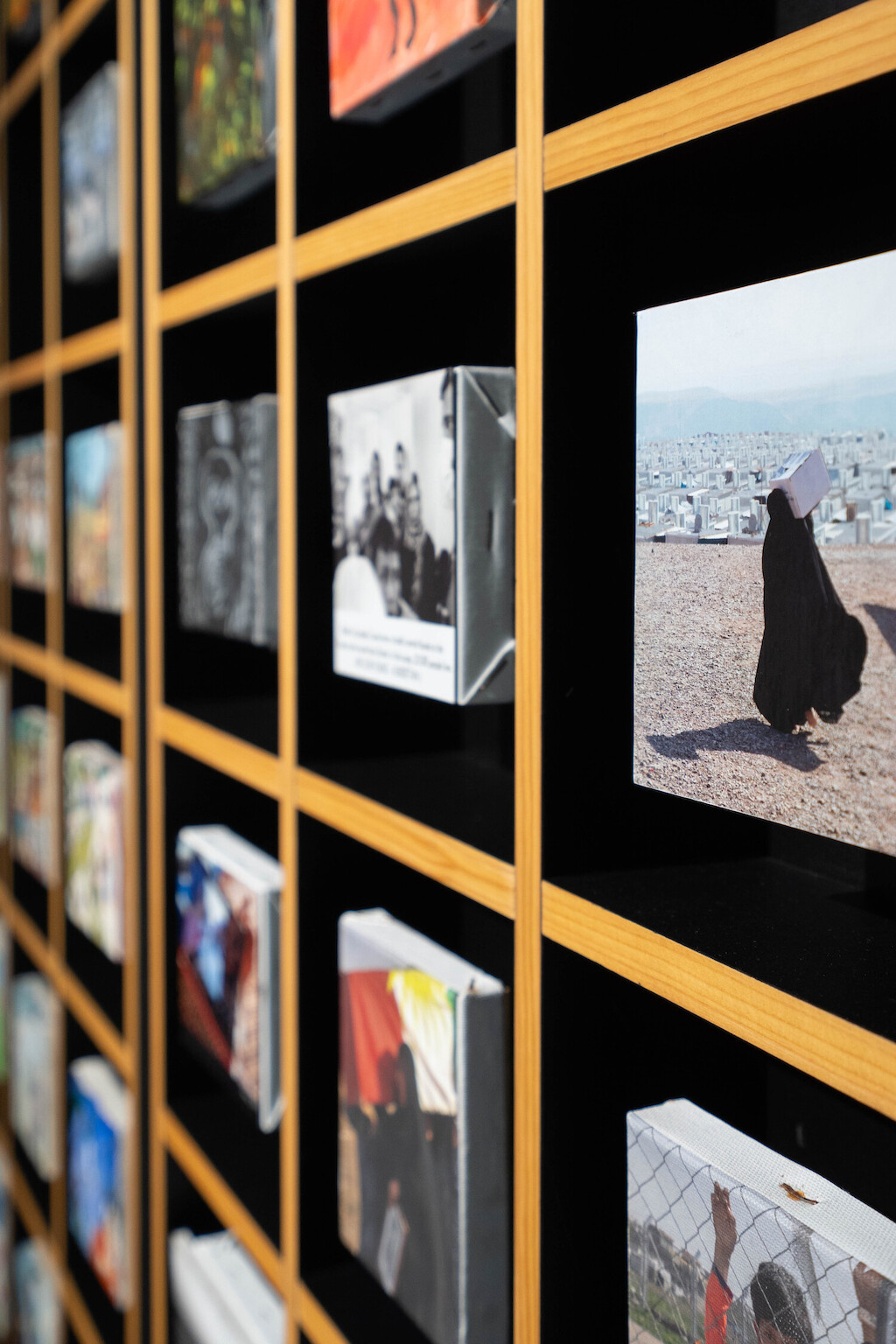
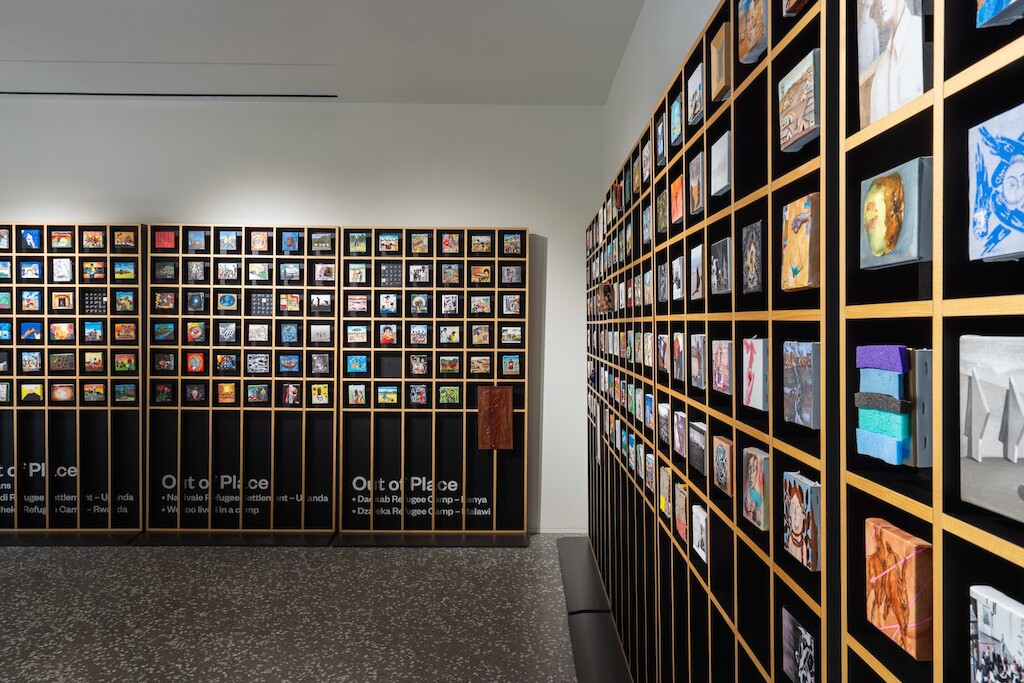
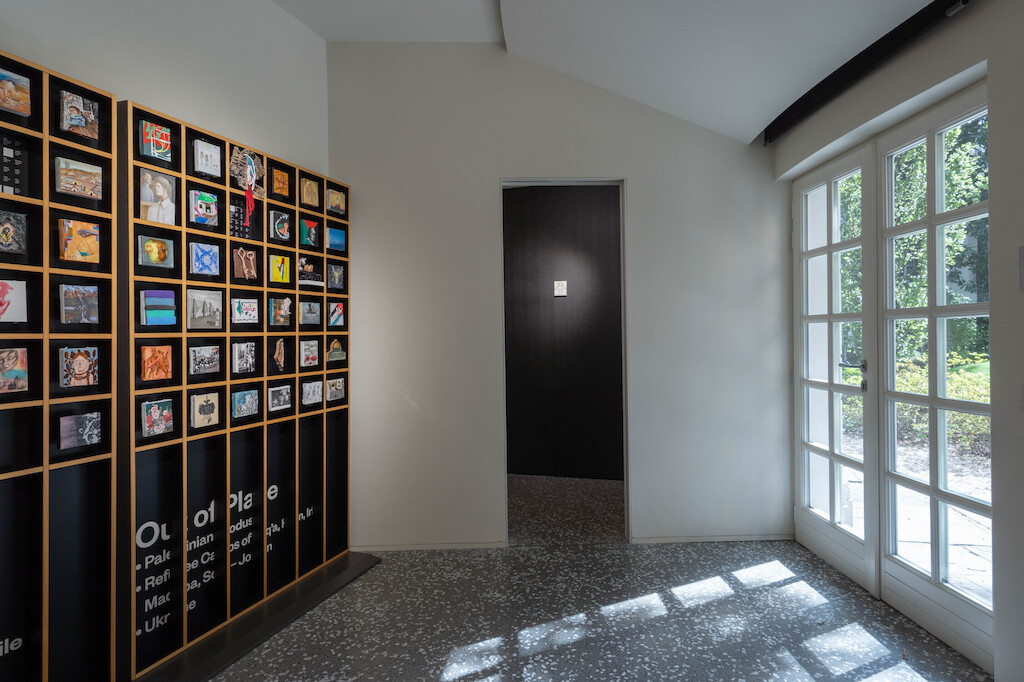
Based on research conducted between 2022 and 2024 across eighteen of the largest refugee camps currently in existence, as well as other areas affected by migration, Out of Place presents the testimonies—through artworks and personal stories—of 264 artists who live in these settlements or who have experienced similar circumstances in the past. Alongside the 284 artworks created in the collection’s distinctive 10 × 12 cm format, the project gives significant space to the artists’ narratives, offering an exploration of the current global refugee crisis, the most complex in history according to the United Nations High Commissioner for Refugees (UNHCR).
Today, 117 million people have been forced to leave their homes because of war, persecution and violence. Approximately 19% of them—around 8.7 million people—live in refugee camps.
Borrowing the term out of place, which Palestinian writer Edward Said used to describe refugees, including himself, the project was conceived to provide a space for artistic and narrative expression to artists living in one of the most challenging realities of our world: refugee camps. As Said wrote, “Exiles, migrants, refugees and stateless persons, uprooted from their homelands, are compelled to confront a new landscape; and creativity, as well as the profound unhappiness often attributed to such out-of-place subjects, constitutes one of those experiences that has yet to find its own narrative.”
The exhibition originates from a collection within the Imago Mundi Collection, curated by Claudio Scorretti, Irina Ungureanu and Aman Mojadidi, involving artists who live or have lived in refugee camps and who were invited to create works in the 10 × 12 cm format.
The exhibition also offers a broader reflection on today’s global refugee crisis. Following testimonies from Kutupalong in Bangladesh, the exhibition presents works from Africa, including two major camps in Kenya—Dadaab and Kakuma—as well as the settlements of Nakivale and Bidibidi in Uganda, Dzaleka in Malawi, Nyabiheke in Rwanda, and Smara together with the adjacent camps of El Aaiun, Awserd, Boujdour and Dakhla in Algeria.
The artworks also provide testimonies from the Middle East, including Za’atari, the largest camp for Syrians, and five Palestinian refugee camps—Baq’a, Hittin, Irbid, Madaba and Souf—all located in Jordan.
This geographical map is further enriched by artists who, from the 1980s to the present day, have experienced similar situations in other parts of the world, including Kurdish and Yazidi artists who recount the complex history of their people, and 40 Afghan artists who either left Afghanistan or remained there following the Taliban’s return to power in August 2021.
The collection is completed by testimonies of migration into Europe from Ukraine and along Mediterranean routes, as well as a section dedicated to migration corridors in Central and South America, with a focus on the border between Mexico and the United States.
The exhibition also marks the 75th anniversary of the Convention Relating to the Status of Refugees, adopted in Geneva. The Refugee Convention is the most important international instrument for the protection of refugees—individuals who are outside their country of origin and who cannot or do not wish to return because of a well-founded fear of persecution on grounds of race, religion, nationality, membership of a particular social group, or political opinion. It establishes a comprehensive framework of rights and obligations, including access to justice, education and employment, as well as fundamental principles such as non-discrimination and non-penalization.

THE CATALOGUE
The Out of Place collection is accompanied by the catalogue of the same name, published by Imago Mundi Collection and available for purchase in the Museum Bookshop.
FUNDRAISING INITIATIVE
Bags and pouches made by Ugandan women are available for purchase in the Museum Shop. Proceeds from sales will be donated to UNHCR.
GUIDED TOURS
A guided tour is offered every Saturday at 11.00 am. Participation is free of charge upon online reservation.
Media