Archaeological collection
Archaeological collection
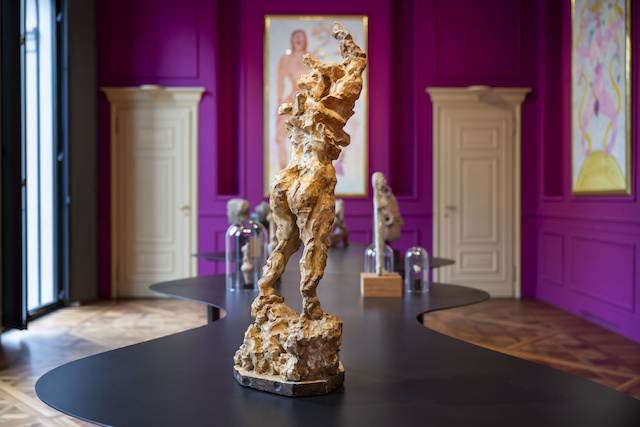
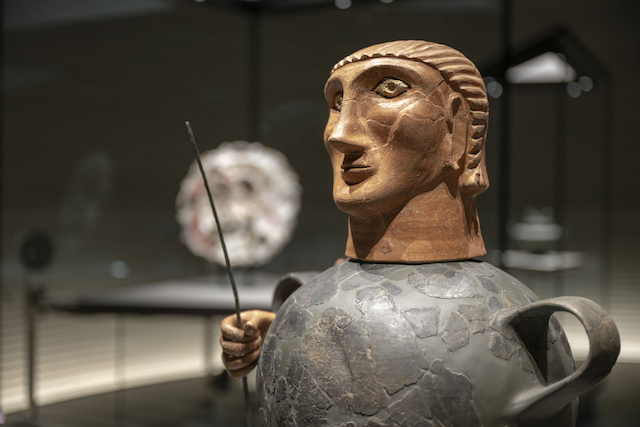
The Luigi Rovati Foundation's collection of antiquities is part of Milan's well-established tradition of Etruscan collecting. The first nucleus of the collection is the CA collection, which includes more than 700 examples of Etruscan and Italic ceramic and bucchero pottery. The second acquisition was the Cambi collection, which brings together part of numerous Etruscan collections known from the 18th and 19th centuries. This provides an important insight into the history of archaeological collecting in central and coastal Etruria in the 19th century. Finally, other collections and individual finds have been acquired from private individuals or at auctions and specialised galleries, giving the collection a heterogeneous character.
The artefacts in the Foundation's Etruscan collection, mainly housed in the basement of the building, are divided into thematic sections illustrating salient aspects of Etruscan civilisation: religion, warriors and the aristocracy, banquets, the relationship with nature, writing and the production of jewellery and precious objects.
The Etruscan civilisation
The Etruscan civilization has its roots in the Villanovan culture (9th–8th century BC), which developed in Tuscany, northern Lazio, Emilia, and Campania.
In this phase, the first villages appeared along with the characteristic biconical vases covered by overturned bowls, associated with the rite of cremation.
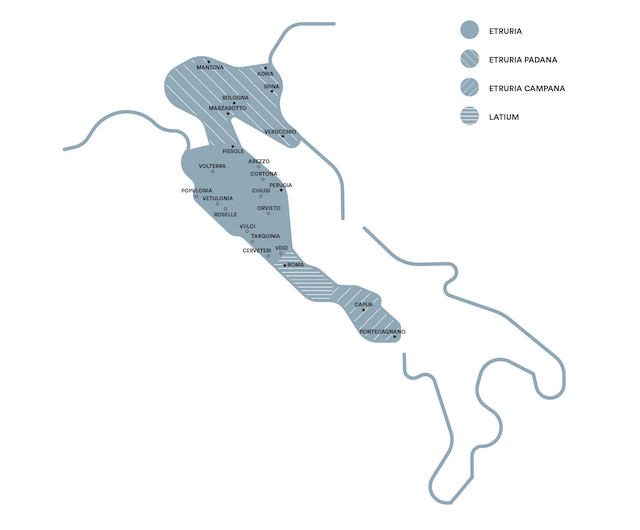
With the Orientalizing period (720–580 BC), the Etruscans were strongly influenced by Greece and the Near East, from which they imported not only artifacts but also iconographies, customs, and writing. Villages transformed into Etruscan cities, and aristocracies emerged. The funerary rite of this period often included the construction of monumental tumuli with chamber tombs.
During the Archaic period (6th century BC), Etruscan civilization reached its peak: urban planning, temples, painted tombs, terracotta and bronze sculpture flourished. Etruscan cities became powerful cultural and commercial centers.
In the Classical period (480–320 BC), the Etruscans maintained close relations with the Greeks: Attic pottery spread, and coin minting began.
However, internal conflicts emerged, along with external pressures from the Samnites and the first crises of the coastal cities.
With the Hellenistic period (4th–3rd century BC), Roman expansion and Gallic invasions weakened the Etruscans.
The cities lost autonomy, and craftsmanship entered a phase of stagnation, though the production of sarcophagi and urns in terracotta and stone continued.
Finally, between 89 and 27 BC, with the Lex Iulia of Julius Caesar and the Augustan reform, Etruria was integrated into Regio VII of Roman Italy, marking the definitive Romanization of the Etruscans and the end of their political and cultural autonomy.


